Second batch · LSJZ2-1
Wufu Alley Building Cluster
Wufu Alley Building Cluster (五福里建筑群) is a group of lane houses in Hangzhou, China, built in the 1920s. The city declared it a protected historic building on 1 July 2005, as number LSJZ2-1 in the second batch of 47.
On this page
What the listing says
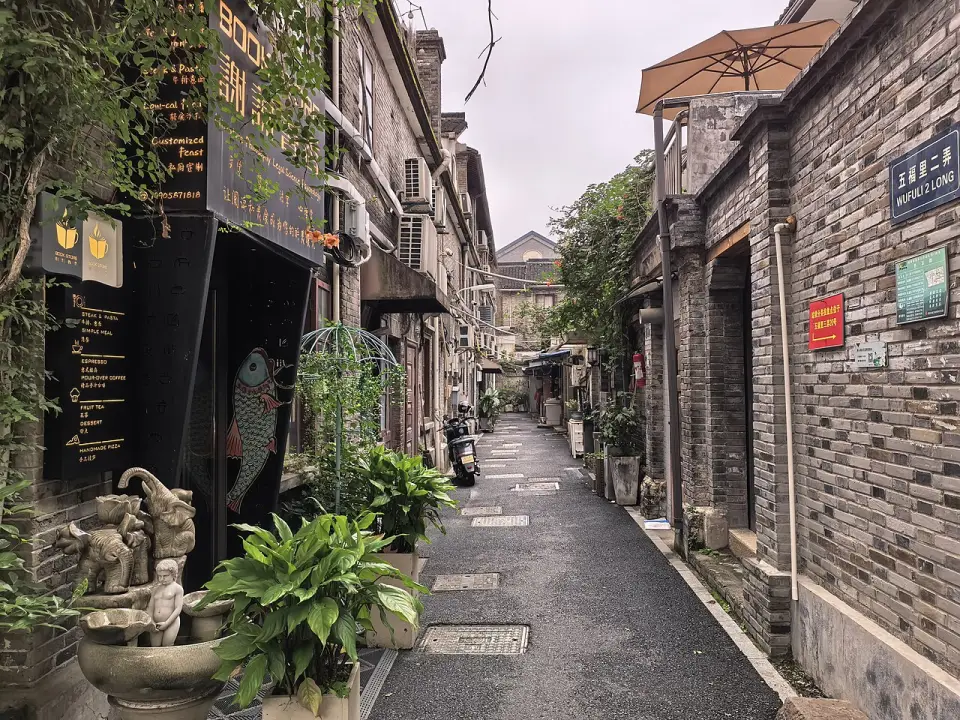
The city's description, as summarised on English Wikipedia: Constructed in the 1920s, this cluster is an apartment-based alley residence.
Key facts
| Fact | Detail |
|---|---|
| List number | LSJZ2-1 |
| Chinese name | 五福里建筑群 |
| Batch | Second batch, announced 1 July 2005 |
| Built | 1920s |
| Listed address | 板桥路五福里一弄1至11、二弄1至14、三弄1至11号 |
| Type | Shikumen lane houses |
Where it fits
Lane houses, called lilong or, after their stone door frames, shikumen, are terraces of two-storey houses along a narrow lane entered through a gateway. The type spread from Shanghai to Hangzhou between the 1910s and the 1930s. Several of Hangzhou's listed lanes stand east of West Lake; Sixinfang, for example, was built on land of the Qing banner garrison that was cleared in 1913. All the shikumen lane houses on the list.
It belongs to the second batch, announced on 1 July 2005: 47 buildings, including 1920s lanes, university campuses of the 1950s and 1960s, Hangzhou Gymnasium and the villas of Lingyin and Shengtang roads.
What the listing protects
A listed building may not be altered, moved or demolished without approval. Under the regulations in force since 1 October 2013, each listed building has a protection plan and a sign put up by the city, and falls into one of three protection categories, from keeping its main exterior features to keeping its exterior, plan, structure and details.
Its owner, or for a state-owned building its user, is responsible for upkeep and repairs, and a repair plan must be approved first. The listing does not open a building to the public: most listed buildings are still homes, offices, schools or shops.
Next to it on the list
- Jiuxing Alley Building Cluster: LSJZ2-2, 1920s
Sources and licence
- Description: adapted from the English Wikipedia article List of second batch of declared historic buildings in Hangzhou, CC BY-SA 4.0.
- Chinese name, period, address and remarks: Chinese Wikipedia, 杭州市历史建筑, CC BY-SA 4.0.
- Listing: Hangzhou municipal government notice 杭政办函〔2005〕193号 of 1 July 2005.
- Photo: Yumeto, CC BY-SA 4.0, from Wikimedia Commons. Photos credited to "hangzhoumemory" or "Laohangzhou" were uploaded by the former heritage portal; Hangzhou Memory is not connected with it.
- The text of this page is available under CC BY-SA 4.0.
Frequently asked questions
Where is Wufu Alley Building Cluster?
The city's list gives its address as 板桥路五福里一弄1至11、二弄1至14、三弄1至11号, Hangzhou. Chinese map apps and taxi drivers will recognise the address in Chinese.
When was Wufu Alley Building Cluster declared a historic building?
On 1 July 2005, as number LSJZ2-1 in the second batch of 47 historic buildings announced by the Hangzhou municipal government (杭政办函〔2005〕193号).
What does LSJZ2-1 mean?
It is the building's number on the city's list. LSJZ abbreviates lishi jianzhu, "historic building"; 2 is the batch and 1 its place in that batch.
Keep reading
- The Second Batch of Hangzhou Historic Buildings (2005)The second batch of Hangzhou historic buildings: 47 buildings declared on 1 July 2005, each with its number, period, address and a page of its own.
- Hangzhou Shikumen Lane Houses: The Listed Stone-Gate LanesHangzhou shikumen lane houses explained: the 19 stone-gate lanes on the city's historic buildings list, from Yuanmaoli to Sixinfang, with a page for each.
- Hangzhou Historic Building Regulations: What a Listing MeansHangzhou historic building regulations in plain English: what can be listed, the three protection categories, owners' duties, fines and the 2023 city-wide law.
Hangzhou Memory is an independent reference site. It is not affiliated with the Hangzhou municipal government, its heritage or real estate bureaus, or any previous operator of this domain.